

Updated November 2026 · 5 min read
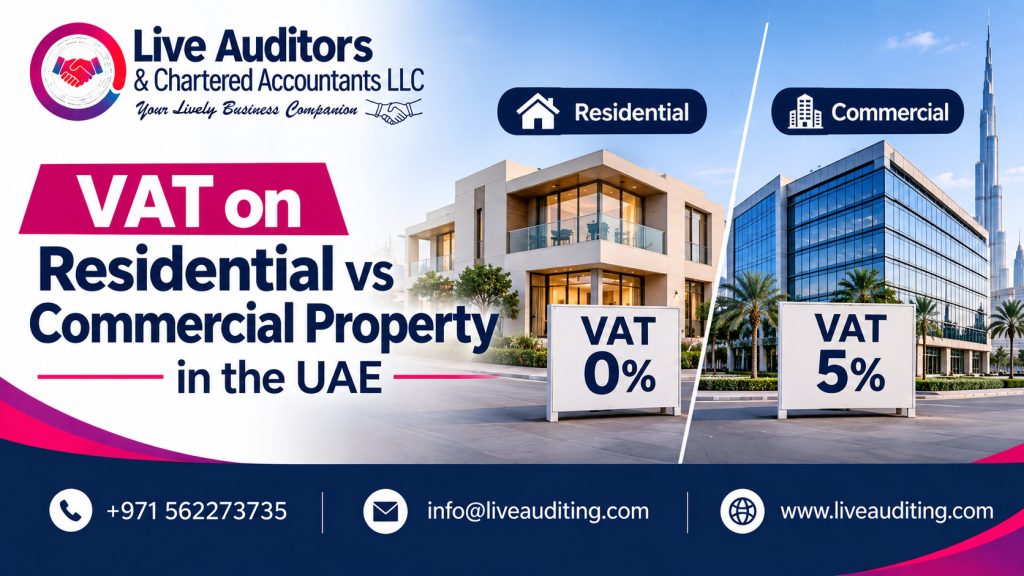
The VAT gap between residential vs commercial property in the UAE is wider than many investors expect. Selling a new apartment can be zero-rated, and renting it out is usually exempt. Yet leasing a shop next door attracts VAT at 5%. Those differences change cash flow, input tax recovery and even whether a landlord needs to register at all. This guide sets out the main rules for owners, developers and tenants, and explains where working with VAT consultants in Dubai can save expensive mistakes.
Why Residential vs Commercial Property Matters for VAT
UAE VAT law does not treat real estate as one category. It splits property into residential buildings, commercial buildings and bare land, and each follows its own rules.
Broadly, a residential building is a place someone designs and uses as a home, such as an apartment or a villa. That definition leaves out hotels, motels, serviced accommodation and similar short-stay places, even if people sleep there. Anything that is not residential, such as offices, warehouses, shops and hotels, generally counts as commercial.
The label matters because it decides whether a supply is standard-rated at 5%, zero-rated or exempt. Those three outcomes look similar on an invoice, but they behave very differently when it comes to recovering VAT on costs.
How Residential Property Is Taxed
For residential property, the law separates the first supply from everything that follows.
The first supply of a residential building, by sale or lease, is zero-rated if it takes place within three years of completion. A Dubai developer selling a new apartment to its first buyer charges VAT at 0%. Because the supply is zero-rated rather than exempt, the developer can usually recover the input tax it paid on construction costs.
Later supplies are different. Resale of the same apartment by an investor, and residential leases after the first supply, are generally exempt. The buyer or tenant pays no VAT. However, the seller or landlord cannot recover VAT on related costs such as maintenance contracts or agency fees.
For an individual who owns a few rented flats, this usually means no VAT registration for the residential rent itself. That is because exempt income does not count towards the registration threshold.
How Commercial Property Is Taxed
The sale or lease of commercial property is standard-rated at 5%. That covers offices in business districts, retail units in malls, warehouses in industrial areas and similar premises.
A landlord whose commercial rent and other taxable supplies exceed AED 375,000 in a 12-month period must register for VAT. Once registered, the landlord charges 5% on rent and service charges. In return, the landlord can recover input tax on related costs such as fit-out, repairs and management fees.
Many individual investors overlook this point. A single office floor in Business Bay can push an owner over the threshold. Also, the registration duty applies to individuals as well as companies. Missing it creates penalties and back-dated VAT that landlords cannot always pass on to tenants.
Mixed-Use Buildings and Serviced Apartments
Real buildings rarely fit neatly into one box. A tower with shops on the ground floor and flats above makes both standard-rated and exempt supplies. The owner has to split the consideration between the two parts on a fair and reasonable basis. The owner must also apportion input tax on shared costs.
Serviced apartments and holiday homes cause regular confusion. Where accommodation is provided on a hotel-style basis, with services and short stays, it usually falls outside the residential definition and is standard-rated. A building used as a long-term home counts as residential, even if the owner offers a cleaning service.
Change of use also matters. Converting a commercial building into residential units, or the reverse, can create VAT consequences, including possible adjustments to input tax already recovered under the capital assets scheme.
Bare Land and Off-Plan Purchases
Bare land is generally exempt. That means land with no completed or partially completed buildings or civil engineering works on it. Once a plot has buildings or infrastructure works, it may no longer qualify.
Off-plan purchases raise their own questions. For a residential unit, the developer’s first supply is zero-rated, so payments made during construction usually carry no VAT. For a commercial unit, such as an off-plan office, VAT at 5% is due on each payment as the tax point arises.
Payment plans therefore affect cash flow. Buyers of commercial units should plan for the VAT on every instalment. Registered buyers will then want to recover it promptly. Project budgets, financing and VAT timing are often best reviewed together, and our CFO services in Dubai can help property businesses model that impact before they commit.
Common Mistakes Landlords and Developers Make
Property VAT errors tend to repeat. The most frequent ones are:
- Charging VAT on residential rent, or failing to charge it on commercial rent
- Recovering input tax on costs that relate to exempt residential lettings
- Treating serviced accommodation as residential
- Ignoring the registration threshold for individually owned commercial units
- Missing the three-year window for zero-rating the first residential supply
Each of these can lead to under-declared tax, blocked input tax or penalties. Developers with large mixed projects benefit from having experienced VAT consultants in Dubai review their sales and lease structures before units go to market.
Record keeping is stricter for real estate too. You generally need to keep property records for longer than the standard five years. So do not discard old title documents, leases or construction invoices.
Getting Your Property VAT Right
The core rules are simple to state. New homes sold or leased within three years of completion are zero-rated. Later residential sales and leases are exempt. Commercial property carries VAT at 5%, and bare land is exempt. The difficulty lies in the edge cases, from mixed-use towers to serviced apartments. If you own, develop or rent property and want certainty on your position, our VAT consultants in Dubai can review your portfolio and contracts.
You can read the FTA’s real estate guidance on the UAE Federal Tax Authority website.
Contact us on +971 56 227 3735 or email info@liveauditing.com to review the VAT position on your property.
Frequently Asked Questions
1. Is there VAT on residential rent in the UAE?
Generally no. Residential leases are exempt from VAT, except the first lease of a new residential building within three years of completion, which is zero-rated. Landlords do not charge VAT to tenants, but they also cannot recover VAT on costs that relate to exempt residential lettings.
2. Do I pay VAT when buying a new apartment in Dubai?
Usually not. The first sale of a residential unit within three years of completion is zero-rated, so the developer charges VAT at 0%. Resales of residential property are generally exempt. Buyers still pay other costs such as registration fees, which are not VAT, and agency commission, which carries VAT at 5%.
3. Is VAT charged on commercial property rent?
Yes. Rent on offices, shops, warehouses and other commercial premises carries VAT at 5% where the landlord has VAT registration. Landlords whose taxable supplies exceed AED 375,000 over 12 months must register, and registered tenants can normally recover the VAT they pay on business premises.
4. Are serviced apartments treated as residential for VAT?
Usually not. The residential building definition leaves out hotels, motels, serviced accommodation and similar hotel-style stays. So they generally carry VAT at 5%. A property used as a long-term home remains residential. The facts of each arrangement, including services provided and stay length, decide the treatment.
5. Is bare land subject to VAT in the UAE?
The sale or lease of bare land is generally exempt from VAT. Bare land means land with no completed or partially completed buildings or civil engineering works on it. Once construction or infrastructure works exist, the VAT treatment may follow the type of property instead.
